Category: Uncategorized

  • The Best Website Builders for Hotels in 2024

    The Best Website Builders for Hotels in 2024

    The days when creating a website required deep programming knowledge or large budgets to hire professional developers are over. Modern website builders offer a wide range of hotel-specific templates that are not only easy to use but also highly customizable, allowing every site to reflect the hotel’s unique identity and style.

    These tools have transformed how hotels approach their digital strategy, giving them a platform to showcase their services and amenities. With features like online booking systems, virtual tours, and responsive design, these builders make sure hotel websites are not only visually appealing but also functional and accessible on all devices.

    The evolution of hotel website builders:

    From basic tools to advanced platforms

    In the beginning, website builders were simple and offered few templates and customization options. Hotels often had to settle for websites with little character or functionality, making it hard to stand out online. As the internet became an essential business tool, these builders evolved quickly.

    One major improvement was the introduction of drag-and-drop interfaces. This made it easy for hotel operators to design and customize websites regardless of technical skill. It gave them more control over their online identity.

    With the rise of mobile internet, focus shifted to responsive design. Hotel website builders began offering templates that worked perfectly on any device. This became crucial, as many bookings and inquiries now come from mobile users.

    In 2024, hotel website builders are shaped by the latest trends and technology. Artificial intelligence (AI) is now key, offering personalized visitor experiences based on browsing habits. AI-powered chatbots provide instant help, making guest interactions faster and more effective.

    Key features to look for in a hotel website builder

    When choosing a hotel website builder today, it’s important to find one that not only makes website creation easy but also improves the hotel’s overall online presence. Here are the main features to consider:

    Easy-to-use design interfaces

    Choose a builder with an intuitive interface so hotel staff can create, update, and maintain the website without needing special skills.

    Customization options that reflect the hotel’s brand

    Your hotel’s website is part of its brand. Look for a builder that lets you adjust colors, fonts, layouts, and more to match your visual identity.

    Integration with the channel manager

    A key feature is the ability to connect with your hotel’s channel manager. This allows real-time updates of room availability and pricing across booking platforms, ensuring accuracy and preventing overbooking.

    Booking systems and social media integration

    Seamless booking system integration makes direct bookings easy. Linking to social media boosts marketing efforts and guest engagement across digital platforms.

    Mobile optimization and SEO features

    With more bookings coming from mobile devices, it’s essential that the builder offers mobile optimization. Built-in SEO tools help improve search engine rankings and attract more potential guests.

    Security features to protect customer data

    With data breaches a major concern, the builder should include strong security measures like secure hosting, SSL certificates, and compliance with data protection laws to keep customer information safe.

    hotel booking process

    The best hotel website builders in 2024

    Hotel website builders have advanced greatly, offering features made for the hospitality industry. In 2024, a few platforms stand out for their capabilities, ease of use, and innovation. Here are some of the best, along with their key features, pricing, and real-world examples:

    HospitalityWeb

    • Overview: Made for the hotel industry, with extensive customization and integration with top channel managers.
    • Unique features: Advanced booking engine, multilingual support, and built-in marketing tools.
    • Price: Tiered pricing based on features and scale.
    • Pros: Designed for hotels, full feature set.
    • Cons: Can be overwhelming for small boutique hotels.
    • Case study: Grandeur Hotel boosted direct bookings by 30% in six months after switching to HospitalityWeb.

    StayCreator

    • Overview: Known for its user-friendly interface, ideal for small and mid-sized hotels seeking a simple yet powerful platform.
    • Unique features: Drag-and-drop editor, direct booking incentives, and social media integration.
    • Price: Competitive monthly rates with a free trial.
    • Pros: Extremely easy to use, great for beginners.
    • Cons: Limited advanced customization.
    • Case study: Boutique B&B Villa Rosa improved online visibility and guest engagement with StayCreator.

    InnBuilder Pro

    • Overview: A complete solution with advanced features for larger hotels and chains.
    • Unique features: Scalable architecture, AI-powered analytics, and personalized guest experiences.
    • Price: Custom pricing based on hotel size and needs.
    • Pros: Highly scalable with many features.
    • Cons: Higher cost and complexity.
    • Case study: Hotel Luxe chain managed multiple locations’ online presence efficiently with InnBuilder Pro.

    ResortEngine

    • Overview: Ideal for resorts and luxury hotels, focusing on visual storytelling and immersive experiences.
    • Unique features: High-quality image/video hosting, virtual tour integration, and premium templates.
    • Price: Premium pricing with custom design services.
    • Pros: Exceptional multimedia and visual capabilities.
    • Cons: More expensive, best for high-end properties.
    • Case study: OceanView Resort enhanced guest experience with striking visuals and virtual tours, increasing bookings.

    EcoLodge Designer

    • Overview: Designed for eco-lodges and sustainable hotels, highlighting eco-friendly practices and experiences.
    • Unique features: Eco-friendly design templates, integration with green booking platforms, and carbon footprint calculators.
    • Price: Mid-range pricing with a sustainability focus.
    • Pros: Niche focus on sustainability, perfect for eco-lodges.
    • Cons: Limited appeal outside eco-tourism.
  • Booking Engine Evaluation Guide

    Booking Engine Evaluation Guide

    How To Audit Your Booking Engine (Or a New One)

    Intro 👋

    Today we’ll dive into an overview of how to audit your own booking engine regarding the essential features and qualities to evaluate.

    Who Is This Article For?

      • Hotels currently using the free booking engine provided by their PMS
      • Revenue and marketing managers with low volume of direct bookings from their booking engine
      • Hotel owners or managers considering a new booking engine

    Items to Check When Auditing Your Booking Engine


    ⏩  1. Is your booking engine website performance fast or slow? Test it right now.


    Start here to get your site performance measured:

    Google’s PageSpeed Insights

    https://pagespeed.web.dev

    Just enter your booking engine’s URL on the link above and hit ‘analyze’ – and presto, you’ll get a summary of your booking engine’s technical optimization.

    While the four categories – Performance, Accessibility, Best Practices, and SEO – are all important – the main one to focus on is Performance.

    Here’s a report for one of our ChannelRUSH booking engine sites:

    Google Page Speed Report measuring Booking Engine performance

    👆Just a note: our SEO score is low since we have the booking pages blocked from search engine indexing as not to compete with the rest of the site. 🙂

    ❌ Here’s a BE from a CloudBed’s with a little work to do:


    CloudBeds Booking Engine Performance

    Page load time and performance are critical on mobile, as slow-loading pages lead to higher abandonment rates, particularly among on-the-go users who expect quick, seamless experiences.

    Research shows that even a one-second delay can reduce conversions by up to 20%, underscoring the importance of optimizing for speed to capture more direct bookings and improve user satisfaction on mobile.

    ™️ 2. Can you tailor the booking engine to your brand’s look and feel seamlessly?

    When you click on ‘book’ or ‘search’ on your website, does it feel like the guest just got transported to a totally different website?

    If so, this isn’t good – brand consistency is key for building guest trust. A quality booking engine allows for customized colors, fonts, and layouts that match your website’s overall design.

    Ideally, the booking experience look and feel should match your website’s – the guest should notice no differences.

    ❌ HERE’S A POOR EXAMPLE: Biscayne Suites

    Here is their home page – a relatively nice site…

    HOME PAGE URL: https://biscaynesuites.com/ 

    A hotel websites home page.

    Then as soon as you click on ‘Book Your Suite’ you get to the first page of their booking process:

    BOOKING PAGE URL: https://hotel953.openhotel.com/results.cfm

    The booking engine page for a hotels website.

    Where did we just go – are we still on the same site??

    It looks like we got transported to a totally different site, using a different URL, with a poor layout and poor mobile optimization.

    Not so much trust building and confidence, more of a ‘Am I sure I want to put my credit card into this website?’ type of feeling.

    A BETTER EXAMPLE:

    Ocean Club on Smuggler’s Beach (a ChannelRUSH Booking Engine customer 😉


    HOME PAGE URL: https://www.royaldunes.com/

    Another nice layout for a hotel website.

    BOOKING PAGE URL: https://booking.royaldunes.com 

    A ChannelRUSH Booking Engine page.

    So nice and consistent – the site’s look and feel is identical, and I don’t even notice the transition to the booking engine – it looks like it is exactly part of the site, as it should be.

    😄 3. Is the booking process smooth, intuitive, and guest-friendly?

    A complicated, lengthy, or unattractive booking flow can deter potential guests and result in high abandonment rates.

    Features like autofill, progress indicators, and guest accounts help streamline the process and reduce friction.

    ChannelRUSH Booking Engine Flow

    Aim for a clean design with clear calls-to-action and, most importantly, as few steps as possible from search to booking confirmation.

    Optimized Booking Journey – 4 Clicks

    → Start with a well organized home page, with the ‘call to action’, or booking, easy to find.

    → Search for the dates and criteria of the stay.

    → Room review and selection.

    → Booking details and payment page

    … Confirmed Reservation

    With this type of focus, one could be literally 4 clicks away from a confirmed reservation.

    With the booking engine we designed here at ChannelRUSH, we took great care to make it mobile optimized, lightning fast, and with as few steps as possible from their first page to the completed booking.

    🔧 4. Does it integrate with your channel manager and other essential tools in real-time?

    Your booking engine should work seamlessly with the other systems you rely on. This integration streamlines operations, reduces manual tasks, and ensures data accuracy.

    Real-time updates to room availability and pricing are crucial to avoid overbookings or miscommunication. The booking engine should provide instant updates across all platforms (website, OTAs, etc.), reflecting changes in room inventory and rates accurately and immediately.

    Our ChannelRUSH Booking Engine works seamlessly with our channel manager and our Central Reservation System.

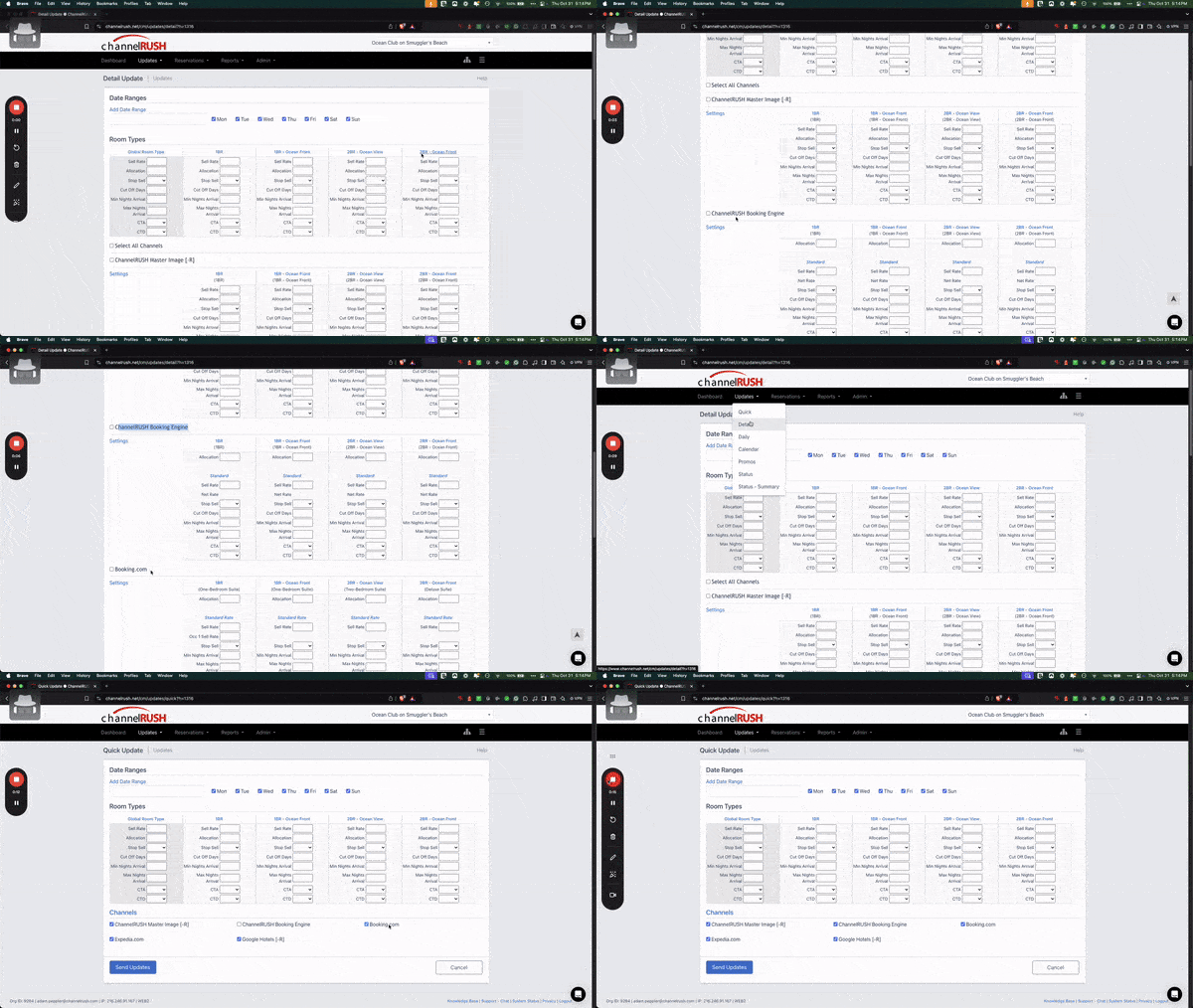
    Here is what it looks like in ChannelRUSH – the booking engine lives right along all of your other channels, updated from your PMS as the same time Booking and Expedia are updated.

    ezgif 2 6d5140c536

    5. Other items to check for…

    A couple more items that are important to check for:

    Can it handle complex pricing models, promotions, and upselling opportunities?

    Dynamic pricing adjusts room rates in real-time based on demand, maximizing revenue during peak periods while maintaining occupancy during off-peak times. Scheduled promotions help target key periods, improving both conversion rates and overall revenue.

    Can your guests book in their preferred language and currency?

    Attracting a global inbound audience, so it’s vital that you can cater to international guests by offering multiple language options and currency conversion features. This improves the user experience for non-native speakers and simplifies the booking process for foreign guests.

    Is your booking engine loading fast and visually appealing on a mobile phone?

    According to Booking.com, about 50% of their bookings are made on a mobile phone.

    The booking engine should provide a seamless experience across all devices, especially mobile phones and tablets, including easy navigation and fast loading times. A non-optimized engine can lead to lost bookings.

    If any of these sound familiar…

    I use the free booking engine from our PMS, it works I guess, but it is a little basic and limited.

    Almost all of our bookings come from Expedia and Booking.com – we don’t get many direct bookings.

    This guide was interesting – our existing booking engine doesn’t live up to many of these criteria!


    … then it might be time to upgrade your booking engine.

    For more info on the ChannelRUSH Booking Engine, check us out our product page or schedule some time to talk:

    Hotel Booking Engine Software | Hotel Booking System – ChannelRUSH

    https://www.channelrush.com/book-a-demo